
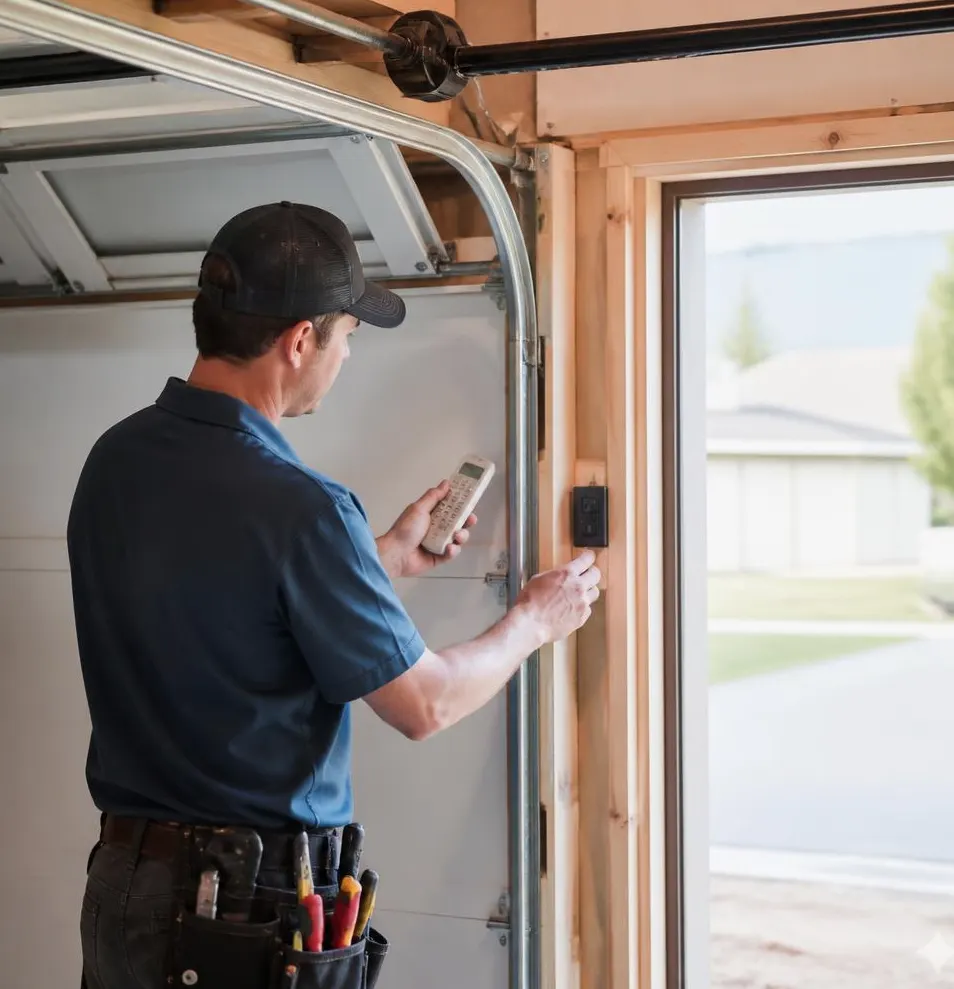
Short answer: if your garage shares a wall or ceiling with living space, or you actually spend time in there, insulation earns its keep. If it's a detached storage garage with no AC ductwork nearby, you're probably paying for a number that doesn't change your life much. Here's the long answer so you can settle the argument for good.
What R-Value Actually Measures (and What It Doesn't)
R-value measures resistance to heat transfer through the door panel itself. A higher number means less heat moves through that one surface. What it does not measure is air sealing around the edges, humidity control, noise, or how the door holds up to Florida weather. Manufacturers often test R-value under lab conditions with the door perfectly sealed — not with gaps at the bottom seal, worn weatherstripping, or a door that's slightly out of track, which is common after a few years of heat and humidity cycling.
So when someone quotes you an R-value, they're giving you one piece of a bigger picture. The real question isn't "what's the R-value," it's "does insulation solve a problem I actually have?"
Who Actually Benefits
- Attached garages with rooms above or beside them. If a bedroom, bonus room, or laundry room shares a wall with the garage, an uninsulated door lets outside heat radiate through that shared space. In our summers, that garage can sit well above outdoor air temperature by mid-afternoon, and that heat doesn't stay put.
- Garages used as workshops, home gyms, or offices. If you're out there for more than a few minutes at a time, insulation makes the space noticeably more tolerable, especially with the door closed and the sun hitting it directly for hours.
- Anyone running a mini-split or window unit in the garage. Insulation keeps that unit from fighting a losing battle against a steel door acting like a radiator.
- Homes where storm noise and door rigidity matter. Insulated doors are built with two steel skins sandwiching a foam core, which makes them stiffer and better at handling wind-load requirements for our storm season. That construction also dampens the drumming sound of heavy rain and wind gusts hitting the panels.
Who's Paying for Nothing
- Detached, unconditioned garages used purely for storage. If nobody spends time out there and there's no shared wall with living space, the insulation isn't doing much besides adding weight and cost.
- Homes where the real problem is weatherstripping, not the panel. A worn bottom seal or gapped threshold lets in more heat, humidity, and bugs than an uninsulated panel ever will. Spending extra on R-value while ignoring a cracked seal is backwards.
- Garages where the door already stays closed most of the day and gets some shade. If the sun isn't hammering it for hours, the heat gain difference between insulated and non-insulated is smaller than the marketing suggests.
The Trade-Offs That Actually Matter Here
In this climate, a few things matter more than the R-value number printed on the spec sheet:
Humidity and swelling
Solid wood or composite doors can absorb moisture and swell during our humid stretches, making them stick or bind in the track. Steel doors with a foam core resist that swelling because the steel skin doesn't absorb water the way wood does.
Rust and salt air
If you're closer to the coast, salt-laden air accelerates rust on exposed steel edges and hardware. Insulated steel doors with a polymer or vinyl-backed interior layer tend to resist moisture intrusion better than a single uninsulated steel skin, which can sweat and corrode from the inside out.
Wind-load performance
Hurricane season means your garage door needs to meet wind-load requirements, and the double-layer construction of most insulated doors adds rigidity that helps here. That's a safety and code consideration, not just a comfort one.
Dent resistance
The foam core also stiffens the panel, which means fewer dents from stray basketballs, bikes, or lawn equipment — a small thing until it's your door.
How to Decide Without Fighting About It
- Walk into the garage on a hot afternoon and put your hand on the ceiling and shared walls. If they're warm, insulation will help.
- Check the current weatherstripping and bottom seal before blaming the door panel for heat or drafts.
- Ask whether the garage will ever be conditioned, even with a portable unit. If yes, insulation pays off.
- Factor in wind-load needs for your area along with comfort — it's often a package deal anyway, since most quality doors built for our storm season come insulated by default.
When to Call Maitland Door & Opener
If you're weighing an upgrade, we'll walk your actual garage — not a spec sheet — and tell you honestly whether insulation solves a real problem or just adds cost. That's part of our Garage Door Installation & Replacement service. If the issue is really a worn-out seal, binding panels, or a door that's swollen and sticking in its track, our Garage Door Tune-Up & Maintenance visit often fixes the comfort complaint for a fraction of the price of a new door.
Give us a call if you're in Maitland, Winter Park, Orlando, Altamonte Springs, Casselberry, Longwood, Eatonville, or Fern Park and want a straight answer about your garage door before you spend money on the wrong fix.