
The One-Sentence Rule
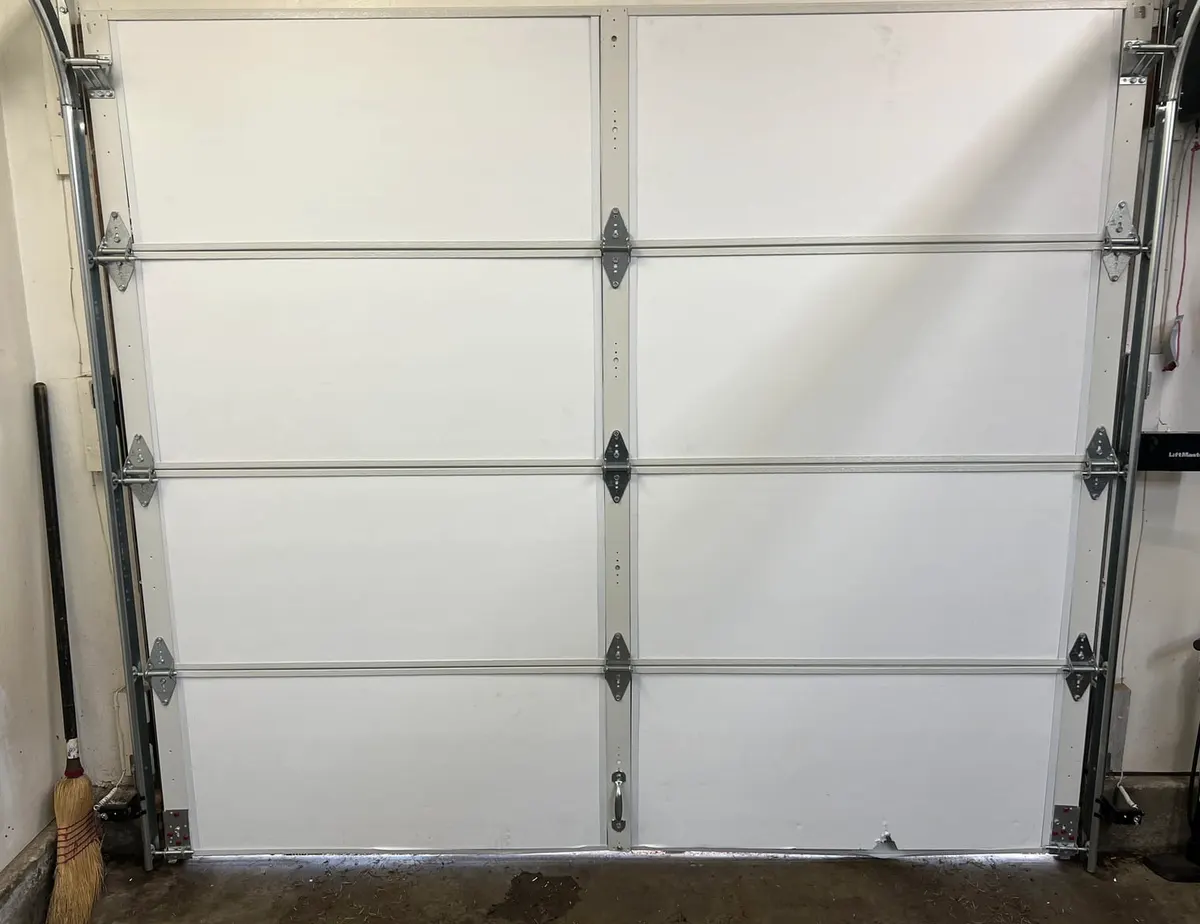
If the garage door still physically rolls up and down, it still has to meet the same wind, weather, and safety standards as any working garage door — no matter what's happening behind it. Turning the space into a gym doesn't lower the bar on springs, cables, or hardware, and it definitely doesn't exempt you from the wind-load rules that matter so much during Florida storm season.
The exception is when you stop treating it like a garage door at all: if you remove it entirely and frame in a permanent wall, those rules go away because you no longer have a garage door — you have a wall with a window where a door used to be. That's a bigger, more expensive project, but it's the only real way to make the door itself irrelevant.
Why the Door Doesn't Retire Just Because the Room Changed
A lot of homeowners assume that once the treadmill goes in, the garage door becomes decorative. It doesn't. The springs are still under full tension, the cables are still load-bearing, and the opener is still cycling the same hardware — or worse, sitting unused for months, which creates its own problems. Central Florida humidity doesn't pause for a home gym. Moisture still gets into the springs, hinges, and track, and without regular use to keep things moving, rust and stiffness set in faster, not slower.
What Different Conversions Actually Do to the Door
Home Gym
Body heat, sweat, and heavy equipment vibration are the main issues here. The extra humidity from workouts adds to what's already a moisture-heavy climate, and that combination speeds up corrosion on hinges, rollers, and the bottom seal where condensation tends to collect. Weight equipment set near the door track can also knock rollers out of alignment over time if nobody notices.
Workshop
Sawdust and metal shavings work their way into the track and roller system faster than most people expect, which turns a smooth-running door jerky or loud. If you're running power tools, the door is also your main ventilation point on hot afternoons, so it gets opened and closed more often — meaning more wear on the opener and weatherstripping, not less.
Extra Room or Office
This is the conversion most likely to involve real insulation, drywall, and conditioned air. If you insulate the walls and ceiling but leave the original garage door in place, you've created a thermal mismatch — one wall of the room is now dramatically less insulated than the rest. That door becomes the weak point for both temperature swings and moisture condensation, especially during humid stretches when warm, wet air meets a cooler insulated room.
What Stays the Same No Matter What You Build
- Wind-load rating: if the door remains, it still needs to hold up to the same storm conditions as before. A converted room behind it doesn't change what's required to keep the door from failing in high wind.
- Spring and cable condition: these degrade whether the door opens twice a day or twice a month. Infrequent use can actually hide early warning signs, because nobody notices a spring weakening if the door rarely moves.
- Opener safety sensors: if the opener still has power and the door still physically closes, the sensors have to keep working correctly. A converted space with people, equipment, or pets inside raises the stakes if something goes wrong.
The Argument-Settling Answer
Here's the short version for whichever side of the debate you're on: you can absolutely convert the garage into a gym, workshop, or room, but the door doesn't get to just sit there ignored. Either it keeps functioning as a real, maintained garage door — including hardware checks and weatherproofing — or you remove it properly and replace it with an actual wall. There's no middle option where it quietly stops mattering.
Signs the Door Is Struggling After a Conversion
- Rust forming at the hinges or bottom corners, often from trapped humidity behind new insulation
- The door getting noticeably harder to lift by hand, suggesting spring fatigue that went unnoticed during low use
- Water or light visible around the edges during afternoon downpours, meaning the weatherstripping no longer seals against the new interior conditions
- Grinding or dust buildup in the track if the space is being used for cutting or sanding work
When to Call Maitland Door & Opener
If you've converted the garage and aren't sure whether the door is still pulling its weight, a Garage Door Tune-Up & Maintenance visit is the right starting point — we check spring tension, lubricate the track and rollers, and look for the rust or swelling that shows up when a door's environment changes. If the space is becoming a permanent room and the door no longer makes sense where it is, we also handle full Garage Door Installation & Replacement, including guidance on what it actually takes to close off that opening correctly instead of leaving a half-finished wall behind an old door.
If you're in Maitland, Winter Park, Orlando, Altamonte Springs, Casselberry, Longwood, Eatonville, or Fern Park and you're mid-renovation or mid-argument about the garage, give Maitland Door & Opener a call — we'll tell you straight whether the door needs maintenance, replacement, or a proper send-off.