
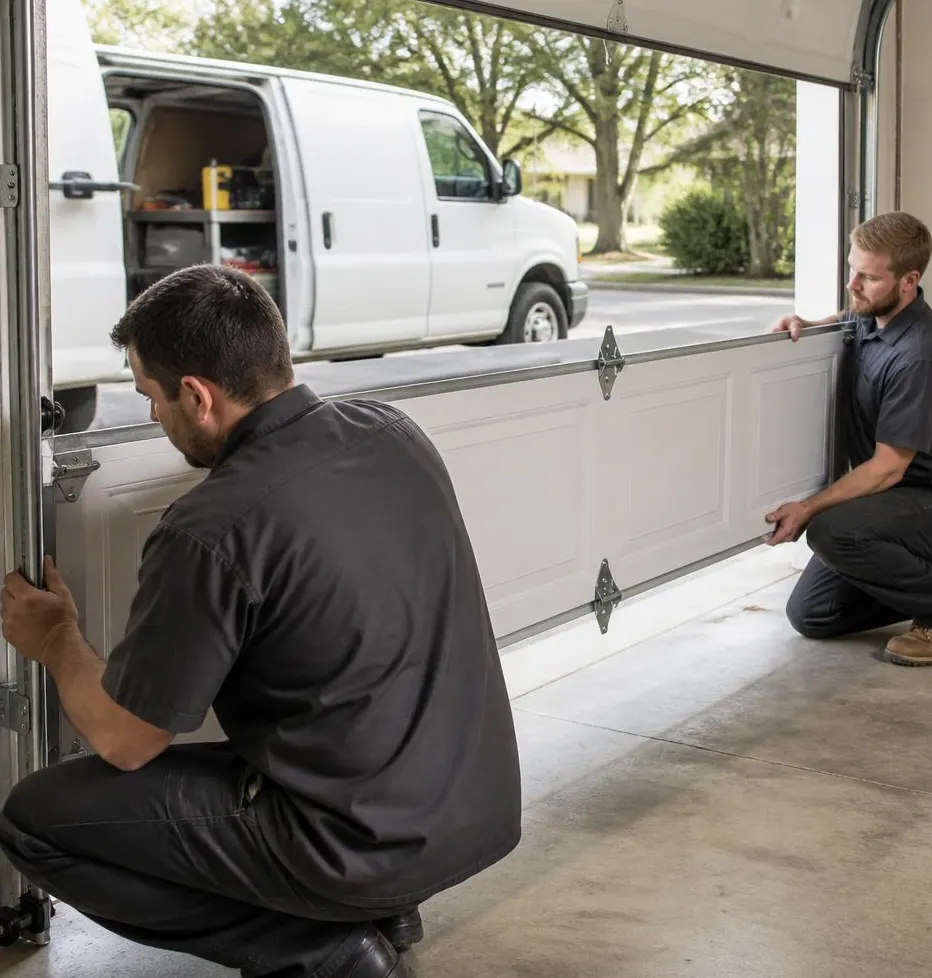
What a Technician Sees This Time of Year
A typical late-fall service call in this area starts the same way: the homeowner says the door has been "a little off" since the last big storm rolled through. On arrival, the usual suspects show up together — a rust bloom on the bottom bracket, a track that's slightly bent from flying debris, weatherstripping that's cracked and curling at the edges, and an opener that groans before it finally catches. None of these are winter problems exactly. They're summer and hurricane-season problems that finally get noticed once the weather cools down enough for people to spend time in the garage again, decorating, organizing, or parking the car they've been leaving in the driveway all storm season.
Check What Summer and Storm Season Left Behind
Central Florida doesn't get a hard winter, but the shift from hot, humid, stormy months to cooler, drier ones is the natural checkpoint to look over a door that's been under stress for months. Walk the full perimeter of the door and look for:
- Rust spots on hinges, rollers, and the bottom bracket, especially if the garage sits on a side of the house that catches wind-driven rain.
- Swollen or warped panels if the door is wood or wood-composite — months of humidity can cause panels to stick or bind at the seams.
- Bent or dented track sections from debris during storms, even if the door still opens and closes without obvious trouble.
- Loose fasteners on the track and hinges — vibration from repeated storm-related openings and closings works screws loose over time.
Catching these now, while the weather is mild and dry, is easier and cheaper than waiting until a cold snap or the next named storm puts extra strain on a door that's already compromised.
Lubricate for Temperature Swings
Garage door hardware depends on lubricant that stays consistent across a range of temperatures, and Central Florida winters bring real swings — warm, humid afternoons followed by cool, dry nights. Cheap household oils can thicken or gum up when temperatures drop, which is why rollers, hinges, and springs start squeaking on the first chilly morning of the season. A silicone-based or lithium-based garage door lubricant holds up better across that range. Apply it to:
- Rollers (avoid plastic rollers with sealed bearings, which don't need it)
- Hinges and pivot points
- The springs, lightly
- The track, only where metal touches metal — never on the track rollers ride in
Skip the drive chain or belt on the opener unless the manufacturer specifically calls for it; over-lubricating there just attracts dust.
Reseal Against Cooler Nights and Pests
Weatherstripping along the bottom and sides of the door does double duty here: it keeps cooler night air and moisture out, and it keeps the usual Florida intruders — palmetto bugs, lizards, the occasional frog — from finding a gap to squeeze through once the weather shifts. If the bottom seal is cracked, flattened, or pulling away from the door, it's not sealing anything. Replacement seals are inexpensive and most are a straightforward slide-in or screw-on job, though doors with non-standard tracks sometimes need a specific profile. While you're at it, check the weatherstripping along the sides and top of the frame, which tends to get overlooked but dries out and cracks just as fast in this climate.
Test the Opener Before the Holidays Bring More Traffic
Garage doors see more daily use in the cooler months — more deliveries, more guests, more trips in and out for holiday decorations stored on garage shelving. This is a good time to confirm the opener is actually keeping up:
- Test the auto-reverse safety feature by placing a block of wood in the door's path and confirming it reverses on contact.
- Check the photo-eye sensors near the floor for dust, cobwebs, or misalignment — a common cause of doors that refuse to close.
- Listen for grinding or straining sounds, which often point to a spring that's losing tension rather than a problem with the opener itself.
- If the opener runs on battery backup, test it now rather than during the next power outage.
An opener that's been quietly struggling all through storm season with a heavier, moisture-swollen door will often make that struggle obvious once temperatures and humidity drop and the door should be moving more easily, not less.
Don't Ignore Balance and Spring Tension
Disconnect the opener and lift the door halfway by hand. It should stay in place on its own. If it drifts down or shoots up, the springs are out of balance — a problem that tends to get worse, not better, with time and repeated use. An unbalanced door puts extra strain on the opener and can lead to a sudden spring failure, which is one of the more jarring and potentially dangerous garage door problems a homeowner can run into.
When to Call Maitland Door & Opener
If you spot rust that's spread past the surface, a door that's noticeably off balance, or an opener that's stopped responding reliably, it's time to call in a professional rather than keep patching things season to season. Maitland Door & Opener handles Garage Door Tune-Up & Maintenance visits that cover the full system — springs, cables, rollers, track alignment, and opener performance — so small issues get caught before they turn into an off-track door or a snapped cable. If the inspection turns up a cracked spring or a bent track, we also provide Garage Door Spring Repair and Off Track Door Repair, with parts and labor to match your specific door and opener setup.
Getting ahead of these issues now means one less thing to worry about once the holidays and the next storm season roll around. If you're in Maitland, Winter Park, Orlando, Altamonte Springs, Casselberry, Longwood, Eatonville, or Fern Park and want your garage door checked before winter settles in, call Maitland Door & Opener today.